An Innovative Team in Its Field: OKTA

Dijital Beşerî Bilimler

Socio-Political Network
An interdisciplinary research line where historical texts are re-examined using AI, NLP, and data science.
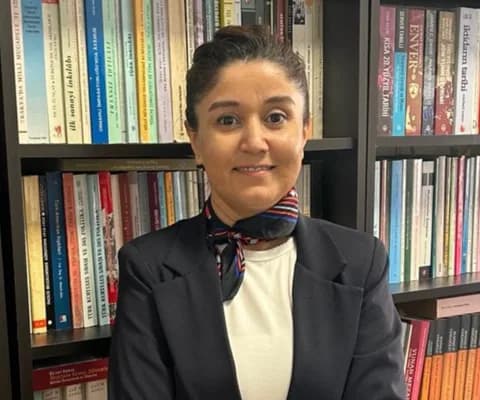 S. Karabulut
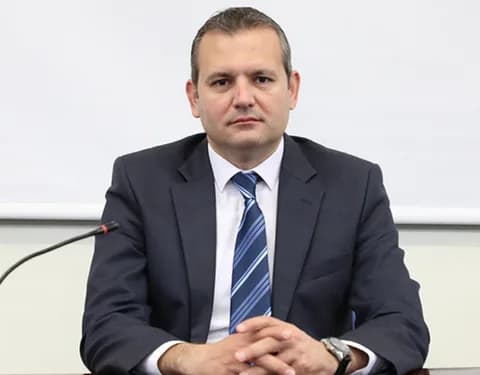 U. Karabulut
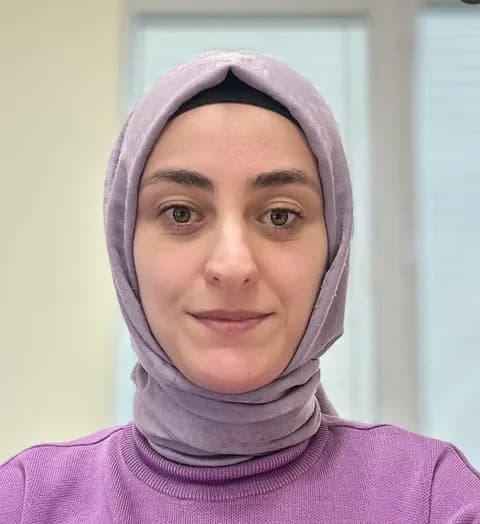 M. Özdeş Demir
 M. İlter
The interdisciplinary OKTA team, based at Pamukkale University, is carrying out an important study focusing on the use of new methods in historical research. The project, titled 'Historical Text Analysis with Hybrid Artificial Intelligence Models: Data-Oriented Examination of Atatürk Era Reader Letters and the Government Agenda', directed by Prof. Dr. Umut Karabulut, has been approved for support under the TÜBİTAK 3005 Support Program for Innovative Solutions in Social and Humanities Research Projects. Prof. Dr. Sezen Karabulut, Asst. Prof. Dr. Merve Özdeş Demir, and Dr. Mustafa İlter take place as researchers in the project.
The primary goal of the OKTA team is to examine reader letters published between 1923 and 1938 not only as historical documents but also as data sources reflecting the social expectations, daily demands, criticisms, and public sensitivities of the period. The project aims to systematically analyze the political, economic, and social agenda of the public in Atatürk Era Turkey by combining natural language processing, large language models, and the 'history-from-below' approach.
One of the important links of the strong research foundation on which the OKTA project is based is the previously conducted project titled 'Socio-Political Network Analysis from the Ottoman Empire to the Republic: Re-Reading Period Testimonies Through Artificial Intelligence (1900–1940)' (OSPA). Hosted by İzmir Institute of Technology and supported under TÜBİTAK 1001, OSPA aimed to re-evaluate historical testimonies extending from the late Ottoman period to the founding years of the Republic using AI-supported methods. Relying on period testimonies such as memoirs, recollections, autobiographies, and diaries, this project focused on making the relationships between historical actors visible through natural language processing, sentiment analysis, interpersonal relationship detection, and social network analysis methods.
One of the most important academic outputs of this methodological pursuit and the OSPA project has been the study published in Digital Scholarship in the Humanities (DSH), one of the prestigious journals in the field published by Oxford University Press. Bringing digital history and AI-based text analysis approaches to the international literature, this publication proves the scientific validity of the innovative methodology developed by OSPA, while forming one of the key reference points for the methodological reliability on which the OKTA project will rise.
The OSPA experience offers an important background in terms of the methodological framework of OKTA. While in OSPA the relationships established by individuals with each other, their emotional states, and socio-political networks were analyzed through period testimonies, in the OKTA project, this approach is applied to a different resource group, namely Atatürk Era reader letters and the government agenda. Thus, the digital humanities approach developed over memoirs and testimony texts in one project is directed towards analyzing the daily demands, expectations, and criticisms of society through reader letters published in newspapers in the new project.
Prof. Dr. Umut Karabulut, who takes place as the project director in the team, stands out with his studies in the fields of the History of the Republic of Turkey, Turkish political life, Atatürk's Principles and the History of Turkish Revolution. Karabulut's academic production offers a wide historical framework on topics such as the early Republican period, political culture, the press, health policies, labor life, and urban history. His book titled 'Political Protest Culture in the City of Izmir (1908–1912)' and various articles on the first years of the Republic are among the important parts of the experience that strengthens the historical foundation of the project.
Prof. Dr. Sezen Karabulut strengthens the social history perspective of the team with her studies in the fields of the History of the Republic of Turkey, modernization, women's history, the press, and social transformation. Karabulut's 2025 study titled 'Re-Reading the Year 1939 in the Light of "Reader Letters"' stands out as one of the current academic outputs directly overlapping with the OKTA project in terms of showing how reader letters can be used as a productive resource in historiography. In addition, her researcher role in the OSPA project strengthens the interdisciplinary experience carried to OKTA regarding the evaluation of historical texts with AI-supported methods.
Asst. Prof. Dr. Merve Özdeş Demir, who is in the artificial intelligence and data engineering leg of the team, contributes to the technical infrastructure of the project with her expertise in data mining, big data, artificial intelligence, and natural language processing. Working in the Department of Artificial Intelligence and Data Engineering at Pamukkale University, Özdeş Demir's fields of study are directly important for the processing of historical texts with machine learning and NLP methods. In this respect, Özdeş Demir represents the engineering dimension of the project in the processes of not only digitizing historical data but also processing, classifying, and analyzing it to produce meaningful patterns.
Dr. Mustafa İlter represents the digital history dimension of the team with his studies in the fields of 19th and 20th-century Ottoman history, bureaucracy, state theories, digital humanities, historical social network analysis, and natural language processing. Having brought experience in re-reading historical testimonies with AI-supported methods as the coordinator of the OSPA project, İlter carries his experience in natural language processing, historical social network analysis, and digital humanities to the new research line centered on reader letters and the government agenda in the OKTA project.
The work of the OKTA team aims not only to digitize historical texts but to extract meaningful historical patterns from these texts. In the project, in addition to reader letters, news content regarding the government agenda of the period will also be analyzed to make a two-way evaluation: on one hand, the impact of state policies on society will be examined, and on the other hand, the forms in which the demands and expectations of individuals reflect on the political, economic, and social agenda will be observed. In this respect, the project stands out as an innovative historical research combining classical archival and press readings with AI-supported data analysis.
Another strong aspect of the project is its goal of adapting language models to take into account the unique vocabulary, idioms, and expression structures of the Turkish of the period. This approach aims to reduce the loss of meaning in historical texts, increase the accuracy of the analyses, and present a new adaptation framework suitable for historical texts for Turkish natural language processing studies.
This line of research extending from OSPA to OKTA shows that the team does not only produce a singular project, but develops a continuous academic approach where historical texts are re-evaluated using artificial intelligence, natural language processing, and data science methods. The methodological foundation established in OSPA over period testimonies and socio-political networks is expanded in OKTA over reader letters and the government agenda, thereby presenting new contributions to the field of digital humanities in Turkey in terms of both resource diversity and methodological depth.
OKTA stands out as a strong research team that brings together historians' source criticism and context knowledge with computer engineering, natural language processing, and artificial intelligence expertise in the same project. The team aims to open a new methodological door showing that the Atatürk Era can be read not only through official decisions and political actors but also through the daily expectations, complaints, and demands of ordinary people writing to newspapers.
Project Team
Our researchers participating in this interdisciplinary research project.
Prof. Dr. Umut Karabulut
Principal Investigator
Pamukkale University, Faculty of Humanities and Social Sciences, Department of History
Prof. Dr. Sezen Karabulut
Researcher
Pamukkale University, Faculty of Humanities and Social Sciences, Department of History
Dr. Öğr. Üyesi Merve Özdeş Demir
Researcher
Pamukkale University, Faculty of Engineering, Department of Artificial Intelligence and Data Engineering
Dr. Mustafa İlter
Researcher
İzmir Institute of Technology, Department of General Education