Historical Text Analysis with Hybrid AI Models
Reader letters published between 1923 and 1938 are analyzed using Natural Language Processing (NLP), large language models, and a history-from-below approach.
 1923–1938
0
TÜBİTAK Program
0 Months
Project Duration
0–1938
Period Studied
0
Periodicals
Making the agenda of ordinary people visible through data
The project systematically reveals the everyday demands, expectations, and criticisms of the public in Atatürk-era Turkey through reader letters, explaining political, economic, and social processes from a bottom-up perspective.
Project detailsOfficial Agenda (Top-down)
Tracking how decisions taken by the ruling apparatus affected the lives of ordinary people.
Public's Agenda (Bottom-up)
Observing whether individuals' demands, criticisms, and expectations influenced political, economic, and social policy.
Period-specific language models
Period-specific language models are used to analyze the distinctive structure and vocabulary of 1923–1938 Turkish.
Letters written to newspapers a century ago carry the voices, concerns, hopes, and everyday experiences of ordinary people into the present. Our aim is to make these scattered voices visible through data-driven methods and to reread the everyday history of Türkiye during the Atatürk era not only through official narratives, but through the words, demands, and perspectives of the people who lived through it.
A dataset drawn from the period's press
To hear the voices of broad segments of society, the dataset was built from periodicals representing different political perspectives.
 → UlusNewspaper
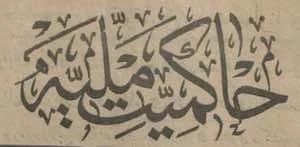
Hâkimiyet-i Milliye
(Ulus)
 Newspaper
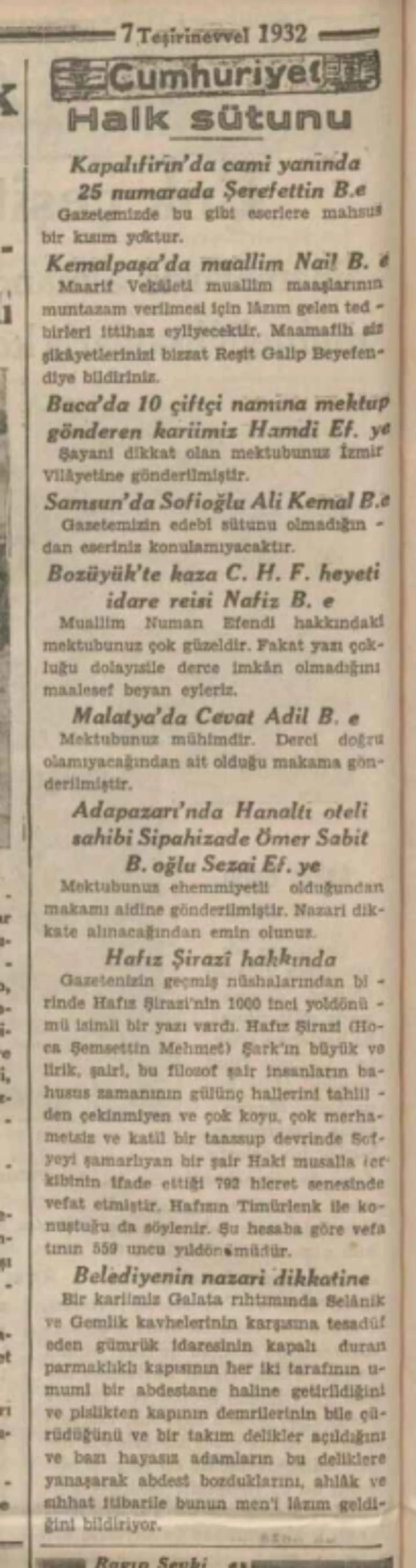
Cumhuriyet
 Newspaper
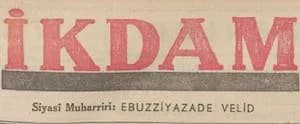
İkdam

 → KurunNewspaper
Vakit
(Kurun)
 Newspaper
Akşam
 Newspaper
Tanin
 Journal
Sebîlürreşâd
 Journal
İctihad
From document to insight: an eight-stage pipeline
Scanned letters and newspaper articles pass through data collection, transcription and digitization, sentiment analysis, keyword extraction, topic modeling, time series analysis, public-government agenda comparison, and quantitative/qualitative evaluation.
- 01Data Collection
- 02Transcription and Digitization
- 03Sentiment Analysis
- 04Keyword Extraction
- 05Topic Modeling
- 06Time Series Analysis
- 07Public–Government Agenda Comparison
- 08Quantitative and Qualitative Evaluation
Try the analysis yourself
Pick a sample letter or paste your own text, and walk through the analysis pipeline with pre-built example outputs.
From archive to digital dataset
View all datasetsLatest news from the project
The OKTA Project at Digital Humanities Gatherings!
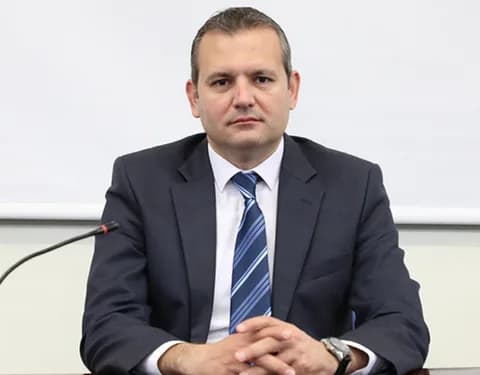
OKTA Project Coordinator Prof. Dr. Umut Karabulut will present the research questions, data sources, and methodological approach of our project at the 33rd session of Digital Humanities Gatherings organized by Marmara University CDH, to be held on Thursday, November 19, 2026, at 13:00.
Read more
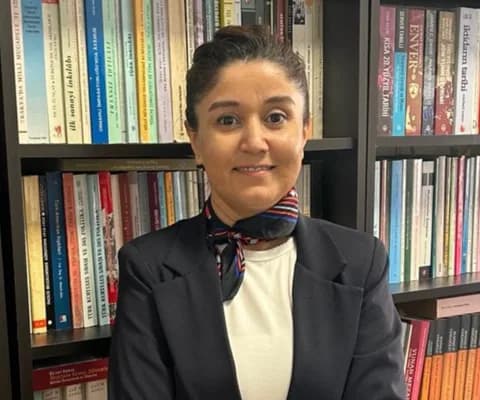
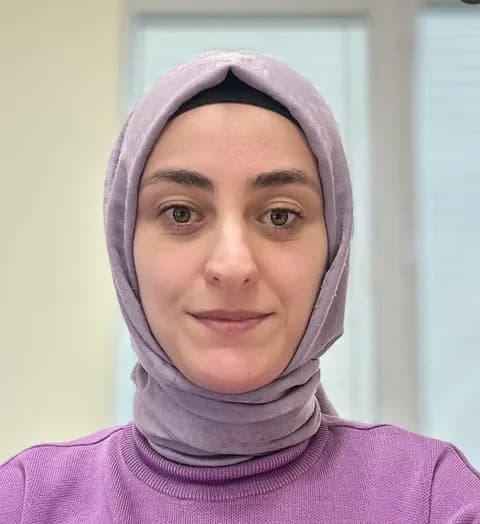

An Innovative Team in Its Field: OKTA
Bringing history, artificial intelligence, natural language processing, and digital humanities together on the same research ground, the OKTA team aims to bring the research experience strengthened by the OSPA project to the Atatürk Era reader letters and make the social voices of the past visible with data-oriented methods.
Read more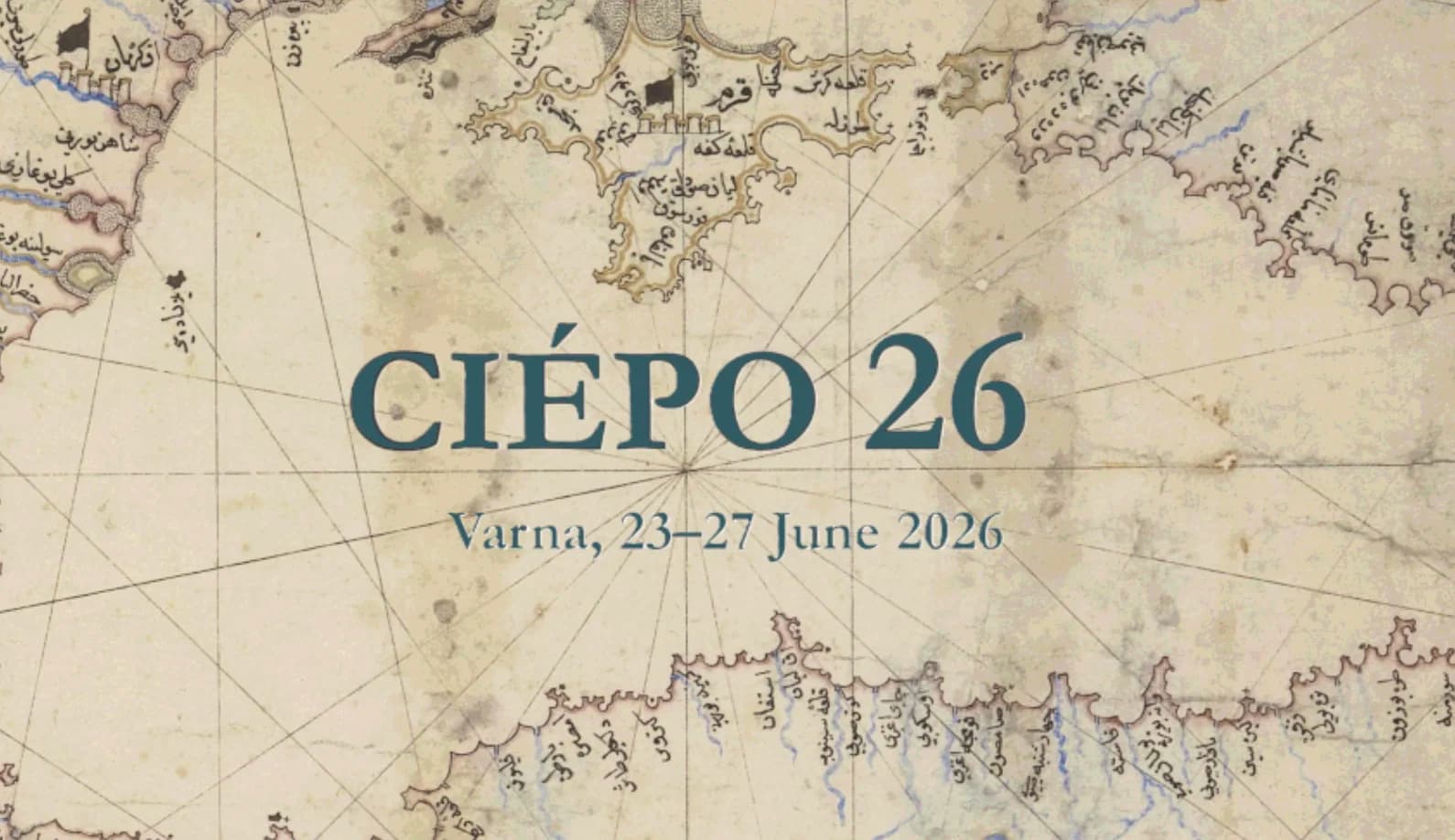
A Digital Ottoman Studies Panel by the OKTA Team at CIEPO 26 Varna
The OKTA team shared its natural language processing, large language model, text mining, sentiment analysis, and digital historiography approaches to Ottoman and Turkish studies with the international academic community through the panel "Natural Language Processing and Large Language Models in Ottoman Studies" at the CIEPO 26 Varna Symposium.
Read more
Our Project Accepted Under the TÜBİTAK 3005 Program
Our interdisciplinary project submitted under the TÜBİTAK 3005-Innovative Solutions in Social and Humanities Research Projects Support Program has been approved for 24 months of support.
Read more