Our Project Accepted Under the TÜBİTAK 3005 Program
In the project, which will be carried out with an interdisciplinary approach submitted within the scope of the Innovative Solutions in Social and Humanities Research Projects Support Program coded 3005, Pamukkale University Faculty of Humanities and Social Sciences Department of History faculty member Prof. Dr. Sezen Karabulut, Pamukkale University Department of Artificial Intelligence and Data Engineering Res. Asst. Dr. Merve Özdeş Demir and İzmir Institute of Technology Lecturer Dr. Mustafa İlter are involved as researchers.
Providing information about their project, which was submitted under the 'TÜBİTAK 3005-Innovative Solutions in Social and Humanities Research Projects Support Program' and supported for 24 months, Project Coordinator Prof. Dr. Umut Karabulut stated the following: 'It is an attempt to systematically reveal the daily demands, expectations, and criticisms of the public in Atatürk's Era Turkey by examining numerous reader letters published in Turkey between 1923 and 1938 using AI-based natural language processing (NLP) and large language models (LLM) methods and a history-from-below approach, and to understand to what extent ordinary people affected political, economic, and social agendas and power-centered processes. The literature on reader letters has emerged mostly through historical and sociological studies and generally on limited data, and a holistic analysis of hundreds of letters using quantitative and data-oriented methods has not been performed. In addition, the use of NLP models adapted to the linguistic features of the period's Turkish is also quite limited, which creates an important gap in the literature. The project aims to fill this gap, proposing a new conceptual and methodological framework in both social-humanities sciences and artificial intelligence research.'
Stating that the project will focus on the agendas of ordinary people in Atatürk's Era Turkey with a history-from-below approach using reader letters as a dataset, and that political, economic, and social processes will be explained with a bottom-up perspective, Prof. Dr. Karabulut continued as follows: 'In this period when modernization gained momentum, the nation-state building process took place, and state authority was felt more strongly, in order to comprehend the agendas of ordinary people and understand their patterns with power policies, government-targeted news from the relevant periodical publications will also be utilized in addition to reader letters. These will be analyzed with natural language processing and large language models and subjected to a two-way examination: First, the effects of the decisions taken by the power mechanism on the people below will be tracked, and second, it will be observed whether the demands, criticisms, and expectations of individuals affect political, economic, and social policies. Thus, a holistic historical perspective will be achieved. In order to capture the language features of reader letters belonging to the 1923-1938 period (words, idioms, etc. specific to the language of the period), existing language models will be adapted using the continual learning method. This method will increase the accuracy and reliability of the analyses by making general-purpose language models sensitive to the unique structure of historical texts, and will also present a historical adaptation framework for Turkish language models. In our project, a dataset consisting of periodical publications with different political views has been selected to hear the voice of broad segments of society. The numbers of Hâkimiyet-i Milliye (Ulus) and Cumhuriyet newspapers, which are close to the government and published almost throughout the research period, and İkdam, Vakit (Kurun), Akşam and Tanin newspapers, and Sebîlürreşâd and İctihad journals, which appeal to different segments of society and were published for limited periods, were determined as the dataset.'
Project Team
Our researchers participating in this interdisciplinary research project.
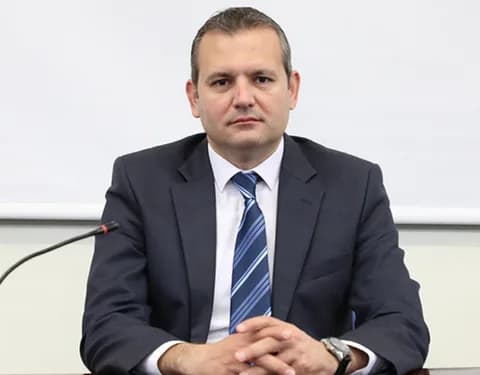
Prof. Dr. Umut Karabulut
Principal Investigator
Pamukkale University, Faculty of Humanities and Social Sciences, Department of History
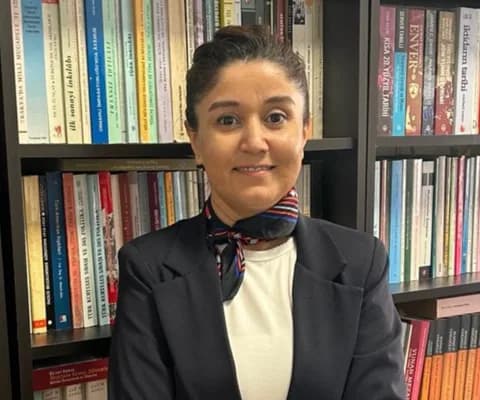
Prof. Dr. Sezen Karabulut
Researcher
Pamukkale University, Faculty of Humanities and Social Sciences, Department of History
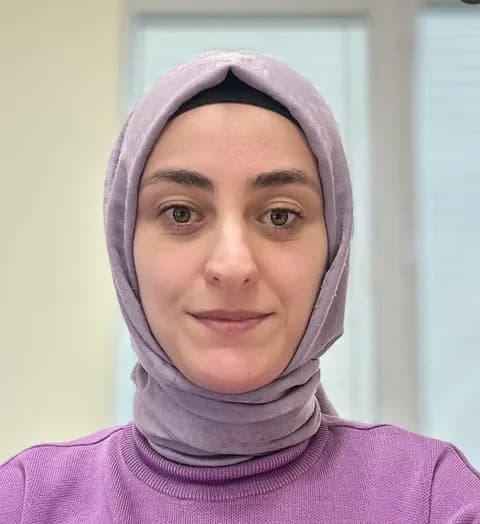
Dr. Öğr. Üyesi Merve Özdeş Demir
Researcher
Pamukkale University, Faculty of Engineering, Department of Artificial Intelligence and Data Engineering

Dr. Mustafa İlter
Researcher
İzmir Institute of Technology, Department of General Education